




 People with epilepsy report “anxiety” over the Personal Independence Payments (PIP) assessment process, while awaiting the findings from the Timms Review this autumn.
The review into PIP, due to be carried out by Sir Stephen Timms alongside two other co-chairs and an appointed a committee of 12 disability experts, is looking to ensure PIP is “fair and fit for the future”.
The inclusion of the steering committee has been welcomed by disability charities, but they warn that the review “cannot become about making cuts”.
Epilepsy Action has said it hopes the review “focuses on fixing the real challenges people face with the current system”.
Daniel Jennings, public affairs coordinator at the charity, said: “What matters most is making PIP fairer and more supportive and not putting up more barriers for people that need support to live well.”
Recent news has also uncovered huge turnover in health professionals acting as assessors for claimants of PIP and Universal Credit.
According to a study by the DWP, around half (52%) of the assessors left the role over the year in 2021. The study also found that around “40% of new recruits also leave during the training period”.
Health professionals cited feeling “de-skilled”, “despised” and being “a cog in the machine doing bureaucratic work.”
One health and disability benefit assessor (HDA) is quoted in the study, saying: “We all got in healthcare for altruistic reasons and that maybe isn’t the case in this job…”
With the Timms Review on the horizon, and a continuing narrative from the government that the benefits bill needs to be cut, people requiring PIP are still facing assessments that they say leave them “dismissed” and “disheartened”.
A day in the life: the PIP assessment
The day before
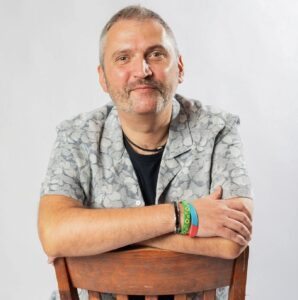
Murray Goulder, 46, from Crawley, who has epilepsy, shared his worries in a post on Facebook. He said: “I find myself once again preparing for my DWP assessment, scheduled for tomorrow at 9am.
“Despite knowing I shouldn’t feel this way, I can’t shake the overwhelming anxiety that has me feeling like I’m about to face a daunting challenge.
“Over the past 30 years, I have meticulously gathered and submitted extensive documentation to support my case. I have followed the advice of my doctors and nurses, exploring every avenue they suggested.
“I’ve come to terms with the reality that I may live with this condition for the rest of my life, potentially suffering its consequences.
“Yet I must still present myself before a panel of individuals who lack specialised knowledge in my condition, all while the government pursues budget cuts. In this system, I often feel like just another number, seen as a cost to society for something I didn’t ask for.
“I have to build myself up to the day. It’s not comfortable.”
The assessment
“The day was frustrating. I had been informed by text a while before of my assessment time and date, but I didn’t actually receive the official letter until the day before.
“On the afternoon before, I was called and asked if I could bring my appointment time forward from 10:30 to 09:00. I agreed.
“On the day, a good friend came with me. When we arrived, we were told by someone that the assessment would be delayed as he’d forgotten the office keys and needed to go home – an hour away – to get them. He then sat in on my appointment.
“My appointment was massively delayed, and I was due to work later that day.
“This was probably the worst assessment I’ve had to date.
“The lady assessing me seemed very inexperienced. She was very robotic and seemed to just be reading from a crib sheet. If I tried to build on my answers, she got flustered and just moved on.
“I had a new piece of further medical evidence from my neurologist clarifying my requirements and risks, and a video of a seizure captured on my doorbell that showed the type of injury I could experience. She didn’t pay attention to either.
“She also kept looking at the man at the back of the room, over my shoulder. It was a bit unnerving.
“My friend said she thought the experience was intense and intimidating if you’re on your own. She also found the interview style quite cold and felt like people shouldn’t be made to wait weeks to find out the result of it.”
The results
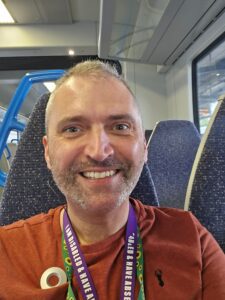
“After leaving the venue, it makes you feel like a liar. PIP is a great system with opportunities, but it is outdated and run by incompetent people, top to bottom.
“It ended up that my PIP was downgraded. I don’t trust the system after so many rejections. I predicted that my PIP would be stopped again and I’d have to start the slow challenge again. I missed continuing my PIP by 2 points.
“I’ve had to go to tribunal for PIP twice – and won my claim both times. I’ve now got to apply for mandatory reconsideration – again – and I predict it will go to tribunal. It’s just frustrating.
“What annoyed me the most is the fact that this review makes reference to the professionalism of my job and to me passing my GCSEs in 1995… These have nothing to do with having epilepsy.
“What is labelled as a ‘benefit’ is, in truth, a necessity. I bear the costs of things like travel, including to and from work, non-prescription medication for daily headaches from my epilepsy and more expensive life and travel insurance because of my epilepsy.
“A lack of support erodes my independence, limiting my ability to pursue hobbies and interests as I struggle to save money to manage my condition. Many individuals in similar situations choose isolation over social interaction.
“The DWP are actively closing off hobbies and putting people at risk. PIP is not ‘bonus’ money – it’s not a perk.”
Have you had a recent PIP assessment? Tell us how you found the experience – contact campaigns@epilepsy.org.uk