




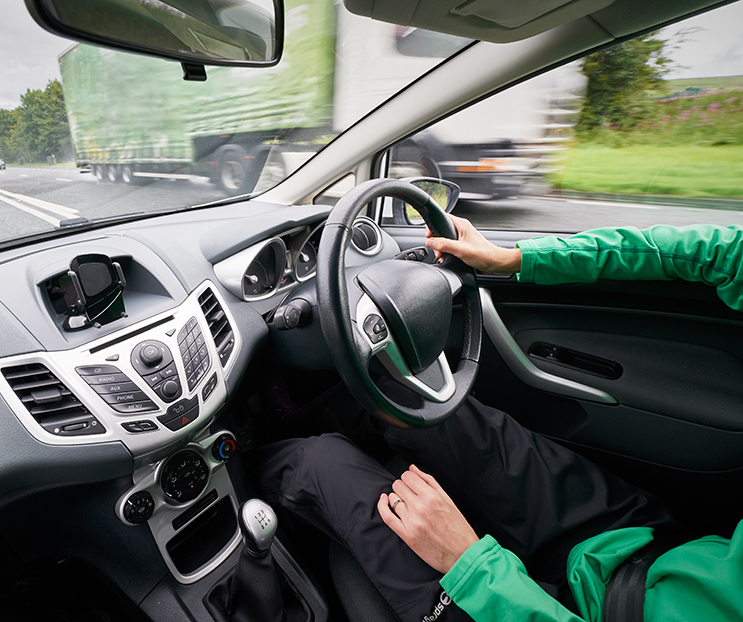
The driving rules
Read about the medical standards you need to meet before you can drive.
Stopping driving
Find out when you need to stop driving and how to tell the driving agency about your epilepsy.


Reapplying for a licence
When you meet the medical standards for driving, you can apply to get your licence back.
Driving FAQs
-
I’ve reapplied for my licence. When can I start driving?
This depends on whether you surrendered your licence or it was revoked.
If you surrendered your licence, you might be able to start driving again as soon as you meet the medical standards for driving, even if you’ve not got your licence back yet. Find out more about this on our page about reapplying for your licence.
If your licence was revoked, you must wait until you get your licence back before driving.
-
I want to get a provisional licence. Do I need to tell the driving agency about my epilepsy?
You must tell the driving agency about your epilepsy when you apply to get a provisional licence.
You’ll need to meet the same medical standards as for a full driving licence. See our information about how to apply for a provisional licence.
-
What help is available if I can’t drive?
Having to give up your driving licence can be really challenging, but there is support available to help you get around. This includes:
- Free or reduced bus and train travel
- Help with travel costs for work (from the Access to Work scheme)
- Reasonable adjustments at work
Find out more about the help that’s available when you can’t drive.
-
How do I check if my licence was surrendered or revoked?
If you’re not sure if you surrendered your licence or it was revoked, you can check your driving licence online. This is only available for licences issued by the DVLA.
-
How will having epilepsy affect my car insurance?
You need to have a valid driving licence for most insurance policies, so you must tell your insurer if you’ve had to give up your licence. You must also tell them if you’ve got a medically restricted licence because of your epilepsy. If you don’t, your insurance may not cover you if you make a claim.
Insurance companies are not allowed to have a blanket policy to refuse or put up the premiums of all people with epilepsy. This would be disability discrimination. But they are allowed to charge you more, or refuse to insure you, if there’s a greater risk in insuring you because of your epilepsy. Their decision must be based on reliable and relevant evidence.
It’s worth shopping around to find the cover that’s right for you at the best price. If a company refuses to insure you, or you feel their premiums are unfairly high, you can ask them for evidence to explain why. If they can’t provide evidence they could be guilty of disability discrimination under the equality laws.
Got any questions?
Our expert advisors can help you with any questions you might have about driving or anything else related to living with epilepsy.
This information is currently under review and will be updated soon.