

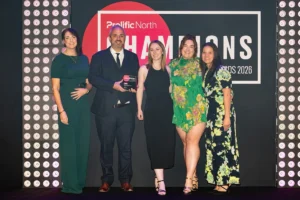
Epilepsy Action has won the Not for Profit Campaign of the Year award at the Prolific North Awards for its 2025 awareness campaign If I Told You, produced with creative agency Magpie.
The Prolific North Awards recognise “organisations, teams and individuals putting the North on the map in the creative and digital sectors”.
The awards, held in Manchester at Emirates Old Trafford on 14 May 2026, saw agencies, organisations and teams of creatives walk away with the coveted prizes across different categories.
If I Told You campaign
The award-winning If I Told You campaign raised awareness of the impact of epilepsy on all aspects of life, including among friendship groups, in dating and relationships and at work.
The campaign aimed at starting conversations about epilepsy and asking the public to reflect on how they react to finding out someone has epilepsy in an effort to help make the world more inclusive to people with the condition.
Reaction to Prolific North Award win
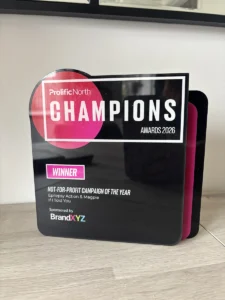
Sharing the news on social media, Epilepsy Action described the win as an “honour”, adding: “We’re incredibly proud of this work and grateful to everyone who helped bring the campaign to life.
“Thank you to Prolific North for a brilliant evening and congratulations to all the nominees and winners.”
Jon Eaton, director of communications and digital engagement at Epilepsy Action said: “When we set out to create a world without limits, we knew that reaching new audiences on a budget was going to be central to that plan.
“This campaign reached nearly two million people online with over half of them between 18 and 25. The response itself on social media and this award tells us that we are telling resonant stories in new spaces.
“This campaign builds empathy by talking about common issues we all face. Epilepsy massively impacts relationships, romance and job prospects. Work like this takes us closer to a world where people with epilepsy can be confident that they are seen and understood.”
Magpie’s creative & digital director, Rose Montague, added: “I’m incredibly proud of what we’ve achieved together. This campaign is a testament to the power of authentic storytelling – which is exactly what we’re about at Magpie.
“A huge thank you to everyone who shared their lived experiences to shape this project, and to the Epilepsy Action team for championing our creative vision and helping us to do it justice.
“The response from both the public and the epilepsy community has been so rewarding to hear, but having the campaign’s impact recognised with this award truly tops it all off.”
Data behind the campaign
The campaign was underpinned by survey results from around 2,000 people, of whom almost half (48%) said they were uninformed about epilepsy.
The survey results revealed that more than a third of people (36%) wouldn’t or are unsure they would feel comfortable dating someone with epilepsy.
Nearly a quarter of people (23%) said they would worry about health and safety risks when hiring someone with epilepsy and more than a third of people (39%) said they believed people with epilepsy can’t handle work or responsibilities.
One in five people (20%) said they would feel nervous about seeing a seizure if a friend told them they have epilepsy, and more than a third (35%) said they thought people with epilepsy need constant supervision.
Meanwhile, nearly nine in 10 people with epilepsy (87%) said they have felt anxiety, depression and isolation on top of having to manage their condition.
The campaign was created to “shift the conversation from fear to understanding, from avoidance to action”, said Epilepsy Action chief executive Rebekah Smith.
Epilepsy Action has produced a number of awareness campaigns since then, including Could I Count On You, asking the public to take onus of being someone a person with epilepsy could rely on in an emergency, and Missing Memories, highlighting the memory loss that can accompany epilepsy and the significant moments that could be lost to the condition.
More articles