




 A 58-year-old man from Bedfordshire died after not being able to get urgent access to his epilepsy medication, an inquest has concluded.
Paul Nash had been diagnosed with epilepsy in 2014, following “significant brain injury” from encephalitis. He had been prescribed carbamazepine and had not had a seizure since 2016, according to the coroner’s report.
According to the report, Paul had not requested all of his prescriptions in September 2025. His full prescription was requested on 20 October, and on 21 October, he informed the charity Headway, in Luton, that he had taken the last of his medication that morning.
The charity had contacted his GP to ask for an urgent prescription, but this was not ready to pick up the next day.
Paul was found dead on 23 October 2025, with “evidence at the scene” suggesting that he had had a seizure in the night.
Although he inquest said the reasons for the seizure were unclear, it concluded that he had “died following an epileptic seizure after running out of his epilepsy medication which meant he had missed three doses”.
Senior coroner Emma Whitting raised concerns with the GP surgery, saying that despite Headway contacting them and stressing that an urgent prescription is needed, this information wasn’t passed on to the GP and the prescription was not prioritised.
The other concern was for Health Secretary Wes Streeting, highlighting that Paul Nash’s consultant neurologist had said that “epilepsy patients across the country currently experience difficulties in obtaining sufficient quantities of medication to ensure optimum seizure control.”
Medication shortages
Research published in 2025 in the journal Pharmacy found that more than seven in 10 people with epilepsy in the UK experienced difficulty getting their epilepsy medication in the past year.
More than nine in 10 people reported shortages for the medication carbamazepine. The medications for which shortages were most commonly reported were carbamazepine, clobazam and topiramate.
The researchers explained that their findings showed that the shortages appeared to be hitting people with epilepsy harder than others. They added that problems appeared to be with the local supply chain and not just manufacturers.
Health improvement and research manager at Epilepsy Action Tom Shillito stressed that the consequences of someone being left without their usual medication can be very serious.
Medication shortages became more commonplace in the last five years. A 2024 report from the Nuffield Trust said “constantly elevated medicine shortages” and disruptions were becoming “a new normal”.
Charlie Card
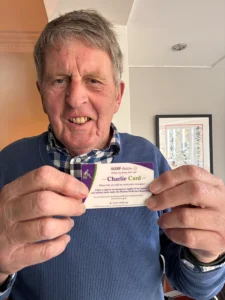 Alan Brown, 80, from York, was diagnosed with epilepsy around three years ago. He experienced problems accessing his medication from his pharmacy recently when they had run out of one of his medications.
He expected to be notified when his medication, lamotrigine and levetiracetam, would be ready to collect, but when he had not heard anything, he got in touch to ask. He was told that one of his medications was unavailable.
“So, I said: ‘Well do you have the rest of it?’ and they said they did. I said: ‘Well, why haven’t you told me one of them is not available and why not at least give me the rest?’
“I didn’t get a satisfactory answer, but luckily I had one of these Charlie Cards.”
The Charlie Card outlines that people have a right to request an emergency supply of their regular epilepsy medications from any pharmacy under the Human Medicines Regulations 2012.
The card was named after 32-year-old Charlie Marriage who died from sudden unexpected death in epilepsy (SUDEP) after “a significant number of failings” from health services left him without his epilepsy medication.
Alan continued: “I showed this Charlie Card and indicated to the pharmacy that they had some responsibility to do something.
“I spoke to the senior pharmacist and she initially said it’s not their job to go hunting around for medications they don’t have. I said: ‘I’m sorry but I think actually you do have a responsibility.’ She went away and looked this up on the NHS website and came back rather shame-faced and said they actually should be doing something about it.”
The pharmacy managed to find a different formulation of Alan’s medications and he was able to collect them that day.
Alan explained he ordered the Charlie Card after reading about it in Epilepsy Action’s E Action monthly email newsletter. He said he ordered one because he felt he would at some point come across a situation where it would be “helpful to have something”.
He added: “My advice to others would be to get one of these Charlie Cards straight away and also understand that pharmacies have some responsibility in this area. I’m afraid you may find that you simply have to challenge pharmacies on this.
“Not everyone is comfortable with doing that. Some people are a bit nervous about doing this, but you have to stand your ground or you could be in real trouble.”

Epilepsy medicines
More information about different epilepsy medicines, how to take them, managing your epilepsy medicines and more