




Senedd 2026 election results: what Plaid Cymru and Reform UK mean for epilepsy care in Wales
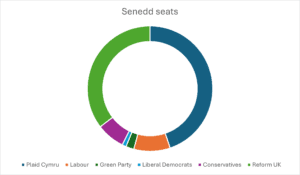
Following the Senedd election on 7 May 2026, Plaid Cymru emerged as the largest party with 43 seats, while Reform UK secured a significant breakthrough with 34 seats, becoming the main opposition. The Plaid Leader, Rhun ap Iorwerth has now been elected as First Minister and will lead a minority government. This means they will need to secure support from other parties for legislation on a vote-by-vote basis.
In England, the local elections saw Labour lose 1,496 councillors while Reform gained 1,451 councillors. Labour lost control of 38 councils, while Reform gained control of 14 councils. After Reform, the Green Party were the other main winners of the day, gaining 44 councillors and control of 5 councils. The Conservatives lost 563 councillors and 6 councils.
And in Scotland SNP remained the largest part with 58 seats in Holyrood, though they do not have a majority so will have to seek a coalition with one of the other parties or form a minority government.
What this means for people with epilepsy in Wales
For the 36,000 people living with epilepsy in Wales, this new political landscape presents both opportunities and risks. Epilepsy Action’s Wales Manifesto 2026 – A Fairer Future for Epilepsy – sets out five clear priorities to improve epilepsy care. While neither the two largest parties Plaid Cymru nor Reform UK made epilepsy‑specific pledges, their health commitments intersect in important ways with what people with epilepsy need most. How these commitments are delivered in practice will be critical but, as we set below, it is encouraging to see that both parties have highlighted areas in their manifesto that align with our calls. There were also manifesto calls by other opposition parties that align with our priority issues.
Cutting waiting times and improving access to neurology
Epilepsy Action is calling for a waiting‑time guarantee for epilepsy care and a dedicated Neurology Backlog Recovery Fund. Reducing NHS waiting times was a central theme for both parties during the campaign.
Plaid Cymru’s manifesto commits to a costed plan to cut NHS waiting lists. The party has pledged to expand capacity, including through new care models and stronger national oversight, with a renewed focus on prevention and public health.
Reform UK also pledged to reduce waiting times, proposing an emergency action plan to increase NHS capacity.
Welsh Labour has committed to investing in NHS capacity. The Welsh Conservatives describe long waits as a health emergency.
Workforce pressures in epilepsy and neurology services
Epilepsy Action is calling for a Welsh Epilepsy Workforce Plan, bringing together neurologists, specialist nurses and allied professionals to ensure services meet patient need. Any future NHS workforce planning must recognise epilepsy as a long‑term neurological condition requiring specialist expertise.
Plaid Cymru has committed to stronger workforce planning and collaboration across health boards, while maintaining bursaries and investing in training as part of its wider NHS reform agenda.
Reform UK has proposed expanding funded training places for doctors, nurses and dentists, alongside performance‑related pay for senior NHS leaders and greater ministerial powers to intervene where services are failing.
Mental health support for people with epilepsy
Epilepsy Action are calling for timely mental health and counselling support. More than 80% of people with epilepsy experience mental health challenges, yet access to psychological support remains inconsistent across Wales. Routine mental health screening at diagnosis and faster referral pathways would significantly improve outcomes.
Plaid Cymru has placed prevention, wellbeing and public mental health at the heart of its vision, including the creation of a Minister for Public Health with responsibility for improving population wellbeing across government.
Reform UK acknowledges mental health within its broader NHS reforms, with pledges to improve access and service performance, though detail is more limited within the manifesto.
The Green Party also called for parity between mental and physical health.
Inequality, rural access and primary care
Epilepsy Action’s manifesto calls for community epilepsy hubs, better GP training and clearer referral pathways. Currently, around 43% of people in Wales are not referred to a specialist after a first seizure, increasing the risk of misdiagnosis and delayed treatment. Access to care varies widely depending on where people live, with rural and deprived communities often facing the greatest barriers.
Improving access in rural and deprived communities feature strongly in Plaid Cymru and Green Party manifestos. Reform have pledged to improve access to GP services through workforce redesign.
Turning election outcomes into action for epilepsy
The 2026 Senedd election has delivered a new political reality, with Plaid Cymru leading a minority government and Reform UK playing a powerful role in opposition. Both parties have made commitments that intersect with Epilepsy Action’s priorities on waiting times, workforce capacity, mental health and inequality.
The challenge now is ensuring that epilepsy is not overlooked within broader NHS reform. Epilepsy Action will continue to work constructively with all parties to highlight the needs of people living with epilepsy.
Epilepsy Action is asking Members of the Senedd to:
- Champion epilepsy services in the new Senedd
- Support our five manifesto priorities in policy and scrutiny
- Listen to people with epilepsy and their lived experience
With significant change comes opportunity. The task of this Senedd must be to ensure that improved health outcomes are felt by everyone – including people living with epilepsy across Wales.
How you can help
Share our manifesto with your Senedd Member, asking them to support people with epilepsy through their work in the new Senedd. You can find out who your Senedd Member is here.