


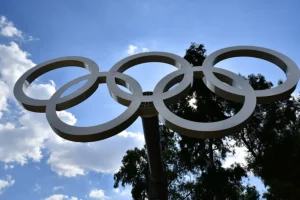
 The Winter Olympics is coming to a close at the end of this week – but what a couple of weeks it’s been! We’ve been glued to it all – from the spectacular opening ceremony, to the mind-blowing leaps made and speeds reached down the slopes of Italy, to the very dramatic curling scandal.
Team GB has already scooped three gold medals at the 2026 games in the skeleton and in snowboarding, with still a few days to go.
It’s hard to imagine ever doing some of the activities we’ve been watching on the ice and snow at the best of times, and especially when epilepsy threatens to derail hobbies and activities.
But there have been – and still are – many athletes competing in the winter and summer Olympic Games despite a diagnosis of epilepsy.
We spotlight seven athletes who competed at the highest levels despite their epilepsy.
Chanda Gunn, US ice hockey goaltender
Chanda, who won a bronze medal at the 2006 Winter Olympics, has epilepsy.
Speaking to the Epilepsy Foundation, she said she believes kids with the condition should be given as much responsibility as possible. “The more they are able to do, and the more you can let them do, the less they’re going to view epilepsy as a handicap or something that inhibits them.”
Evan Neufeldt, Canadian skeleton athlete
Evan, who competed in the skeleton in world championships, had his first tonic-clonic seizure in 2019. In 2020, while in hospital, he had another seizure, falling off the bed and breaking his neck.
In 2023, he was back on the ice in Germany competing in the world championships.
View this post on Instagram
Kevin Nichols, US professional skier
Kevin, who competed in the Freeride World Tour (FWT), had epilepsy as a child which eventually became controlled.
He experienced a breakthrough seizure at the age of 22 and had a rare allergic reaction to his epilepsy medication, derailing his plans to compete in the 2020 FWT. He returned to the sport in 2022.
He filmed a documentary about his experience called DROPPING: A skier’s battle with epilepsy.
Beth Dobbin, British 200m sprinter from Scotland
 Beth was diagnosed with epilepsy as a teenager, with her first seizure leaving her unable to walk, talk or recognise her family. She still lives with anxiety and post-traumatic stress disorder (PTSD) around epilepsy.
She’s won medals across different championships and represented the UK in the 2021 Tokyo Olympics.
Dai Greene, British hurdler from Wales
 Dai was diagnosed with the condition at age 17. His seizures have left him in hospital in the past and he is careful to manage his triggers, including alcohol and lack of sleep.
Dai represented Team GB at the London 2012 Olympics, coming in 4th in the men’s relay and men’s hurdles.
Jessica Warner-Judd, British middle and long-distance runner
 Jessica had her seemingly first seizure in front of a stadium of people and millions of viewers at the European Championships 10,000m final in Rome in 2024. She ended up dropping out from the race with 600m to go and was taken to hospital. She was later diagnosed with epilepsy.
In an interview with the Guardian, she said: “I want to finish my track career on my terms, not epilepsy’s.”
Zac Shaw, British Paralympic sprinter
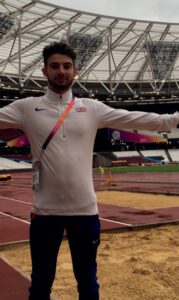 Zac developed epilepsy after slipping on ice and hitting his head on concrete.
He went on win a bronze medal in T12 100m race and silver in universal relay in the Paralympic Games in Paris in 2024.
He said: “The first three medicines I tried completely depersonalised me – they made me feel like I wasn’t me.
“These conditions aren’t visible, so nobody can see how they affect you. If we’re not actively trying to spread awareness, then who is?”
View this post on Instagram
More about epilepsy and sports
Epilepsy Action says staying active is important for everyone. There are steps people can take to reduce risks, and some activities have a governing body and rules around safety and medical conditions.
The organisation has some safety check questions to help people make activities safer, and offers information around winter sports, extreme sports, sports involving water and much more on the Epilepsy Action website.
More articles