



 For both children who have epilepsy and their parents, going back to school or perhaps starting school for the first time can cause worry. It is perfectly understandable that this is the case. The main worry is naturally what if the child has a seizure during the school day, and would they have adequate help in that situation.
Epilepsy Action is here for you to assist, with lots of helpful resources for children, parents and schools to help make things less stressful.
Talk to your school
As a parent, there are some things you can do before the start of school. Firstly, ensure that your child’s school is aware that your child has epilepsy. Our website has a great guide around that, as well as a dedicated section specifically for school staff, offering basic and advanced epilepsy training to help schools understand epilepsy better, spot the signs of different seizures and know how to help.
It is also a good idea for the school, parents and young person to work together to create an Individual Healthcare plan, or ‘IHP’ before children head back to school. Just to note, it could be called something slightly different depending on where in the UK you live. There is a very useful section on IHPs on the Epilepsy Action website. Your child’s IHP should give detailed information about their specific seizures and what first aid they need, so that staff can recognise them if they occur. There are templates available online for these plans, including on our website.
If your child needs to take their medication during the school day, it is also recommended to check if they can do so at school with the support of school staff and without you needing to be present. Ensure that the school has a procedure in place if emergency medication is required. The IHP should also include details of what to do in an emergency. Finally, it is a good idea to establish a good communication system with the school.
Other helpful resources
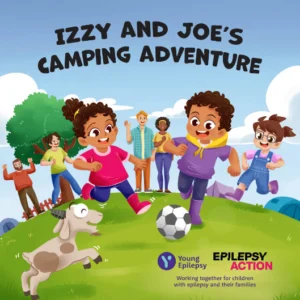 If your child is struggling to understand their epilepsy, or explain it to their friends or their class, Epilepsy Action has teamed up with Young Epilepsy to create a book aimed at 4-to-8-year-olds who have epilepsy, ‘Izzy and Joe’s camping adventure book’. This can offer a fun and accessible way for children to better understand epilepsy.
If you have not already done so, there is also a booklet available to download on the Epilepsy Action website, ‘Your Child and Epilepsy’, as an additional resource.
Back to school: higher education
For young adults who are about to start college or university there are details on how to choose the right course, as well as how to get financial, learning and exam support, and details of some useful potential contacts.
Example of great school support
Lastly, there is an uplifting feature of how a school in Cornwall attended by Grace, four, who has epilepsy, made sure that all staff were trained and prepared from the start when learning of her condition.
This included having Grace’s epilepsy nurse and mum Lyndsey involved in the training sessions explaining how to recognise a seizure. The school has won an Epilepsy Action Star Award after being nominated by Lyndsey. Read the full story online.
There is more information and details on education and epilepsy on the Epilepsy Action website. You can also reach out to our FREE Helpline by calling 0808 800 5050, emailing or starting a live chat.
More articles