


 The London Marathon is mere days away and thousands of people are doing their final preparations before taking on the challenge on Sunday 26 April.
This is the biggest ever Epilepsy Action London Marathon team, with 91 charity place runners and 25 ballot place runners. Epilepsy Action’s digital fundraising and supporter engagement officer, Michael King, is one of the runners this year, raising more than £1,500.
Together, all the runners have raised more than £180,000 to date, and the total is expected to rise over the next weeks.
Epilepsy Action staff and volunteers will be at cheer points on Tower Bridge and Canary Warf, as well as at the finish area.
Ahead of the iconic race, we get to know some of Epilepsy Action’s runners, what motivated them to take on this enormous challenge, and what their top tip is for race day!
Daisy – “Remember why you started”
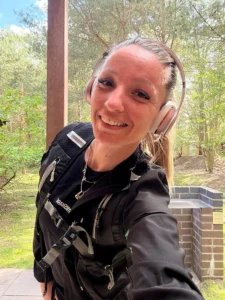
What is your connection to epilepsy?
My brother, Tom, was diagnosed with epilepsy at the age of 10. Growing up, we witnessed firsthand how it impacted every part of his life, but he never allowed it to define him. He approached life with resilience and determination, always choosing to live to the fullest despite the challenges he faced.
Tragically, he passed away in his sleep at the age of 29 following a seizure. His loss was devastating, but his strength, spirit and outlook on life continue to inspire me.
Why did you decide to do the London marathon for Epilepsy Action?
I feel strongly about the impact Epilepsy Action has on people living with epilepsy and their families.
There is still a great deal of stigma surrounding epilepsy, and Epilepsy Action plays a crucial role in challenging misconceptions, improving understanding, and helping people receive the care and support they deserve. Being able to contribute to that through the marathon means a lot to me.
What do you think about when you’re running?
When I’m running, I think about my brother a lot. I think about everything he had planned and all the things he didn’t get the chance to experience. I think about how he lived with epilepsy for almost his whole life, and the strength that must have taken every single day.
There are moments in marathon training that feel really tough, but they’re temporary. When I hit a hard mile or a difficult run, I remind myself that what I’m doing is nothing compared to the challenges he faced throughout his life.
What do you hope your fundraising will help to achieve for people with epilepsy?
I hope my fundraising helps to support and expand the vital work carried out by Epilepsy Action for people living with epilepsy.
From their helpline and support services to the information they provide and the campaigns they lead, every part of their work makes a real difference.
I hope the funds raised help strengthen these services, reach more people who need support, and continue their efforts to improve care and challenge the stigma surrounding epilepsy.
Ultimately, I hope it helps ensure that no one facing epilepsy feels alone, and that they have access to the understanding, support, and resources they deserve.
What is your top tip to anyone running the marathon?
Remember why you started. When it gets tough, that reason will carry you further than your legs ever could.
You can read more about Daisy’s story and support her fundraising on her fundraising page.
Bex – “Be kind to yourself. And enjoy the carbs!”

What is your connection to epilepsy?
I was diagnosed with epilepsy two years ago.
My last seizure occurred in April 2024. I was waiting for a train with my husband and twins. It was a frightening experience for us all, as we were unprepared for what was happening.
I would have done anything to shield my children from witnessing that moment. However, they have since learned how to respond if it happens again – and I could not be prouder!
Why did you decide to do the London marathon for Epilepsy Action?
Epilepsy Action resources are amazing and have helped me to believe I can achieve anything — including running 26.2 miles!
My consultant suggested Epilepsy Action when I was diagnosed. The resources are amazing and were really helpful when trying to explain my epilepsy to family, friends and colleagues.
This video is my favourite – really helps to explain what to do and expect. Now I understand my diagnosis much more, I want others to understand and avoid unnecessary trips to hospital.
What do you think about when you’re running?
All sorts and nothing! That is the joy of running.
As a busy mum of twins, I relish a chance to exercise, whilst getting vitamin D and feel so lucky that I can run.
What do you hope your fundraising will help to achieve for people with epilepsy?
To enable Epilepsy Action to continue to support people just like me and the people that they interact with. I want to show that you can lead the same life and, in fact, be stronger! Epilepsy says stop – we say go!
What is your top tip to anyone running the marathon?
Rest when you can and be kind to yourself. Marathon training is full-on and I wanted to make sure I stayed well and did not risk having a seizure. Also, expect to be tired and hungry and enjoy the carbs!
The Epilepsy Action WhatsApp group has been an amazing support. We are all in it together. It has been incredible to be part of a small but mighty team.
You can read more about Bex’s story and support her fundraising on her fundraising page.
Rachel – “Focus on the atmosphere. And take plasters!”
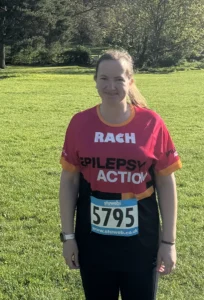
What is your connection to epilepsy?
My connection to epilepsy is both personal and professional. My uncle Jeremy was diagnosed with epilepsy as a young child in the 1970s, and despite multiple treatments, continued to have awful seizures that impacted his whole life.
He tried many treatments and sadly suffered many side effects (and overdoses), causing sedation, and tooth loss, to name but a couple. Sadly, despite treatments, his seizures continued to be very problematic, and he lost his life to his seizures at the age of 23.
When I qualified as a children’s nurse several years ago, epilepsy was the thing that made me the most anxious – probably due to my uncle’s experience. Somehow, it drew me in, and I learnt more and more about epilepsy.
About seven years ago, I worked my way in to epilepsy nursing, first as a clinical nurse specialist (CNS) in secondary care, and later as a CNS in tertiary care for children with epilepsy.
I work every day with children battling seizures, alongside supporting their families, the professionals and education settings to help them provide the best possible support to children with epilepsy.
I refer most of my families, children and education settings to Epilepsy Action, whether that’s for a specific query, the helpline or the online training – and that isn’t even all that is offered!
Why did you decide to do the London marathon for Epilepsy Action?
Completing a marathon, and specifically the London Marathon, has always been a bucket list activity. When I had the opportunity to apply for it via Epilepsy Action, it seemed like something I just had to do.
I use Epilepsy Action as such a resource for my families. There is so much information on the website, from ‘Just for kids’, to the Young adult spaces, giving children and young people, as well as their parents, a space to learn and research at their own pace, when they need it.
The specific questions – such as sections on sudden unexpected death in epilepsy (SUDEP), mean that families can further look at this after we have discussed it in clinic, again allowing them to do this once they have processed things a bit more.
The campaigns to educate the general public about epilepsy is also SO important to me. People often appear to know very little, despite it affecting 1% of the population, and 21 people per week(!) losing their lives to epilepsy related causes.
It seemed like a no brainer for me to want to fundraise for Epilepsy Action given the work they do. It also felt like I should give back, given how much work I probably send their way!
What do you think about when you’re running?
Mostly ‘am I there yet?’
I don’t typically listen to music when I run, but I do have an ‘emergency playlist’ for the marathon for the really tough miles to help me get through.
I find the running is my brain’s free time to work through whatever has happened during the day, and to untangle any tangled up thoughts, or process any frustrations I’ve had.
Sometimes if I’ve had a difficult day at work, or there is a problem to be worked through, this is also my processing time for this. This really takes your mind off when you’re struggling!
I also do tend to have a song going around in my head as a little backing track to all of my thoughts.
What do you hope your fundraising will help to achieve for people with epilepsy?
I hope that my fundraising will raise some awareness to people about epilepsy, and also that it will give some support to Epilepsy Action to continue the incredible work they do supporting the children and families that I work with, and others.
I hope it will help them to continue to fight for newer treatments, and advocate for better support, and rights for people living with epilepsy. I also hope it can support them in advocating for mental health awareness among those living with epilepsy.
What is your top tip to anyone running the marathon?
This is my first marathon, but some tips I’ve had from others are:
- Stick to pace
- Don’t focus on a time, focus on the atmosphere. Talk to people, and cross the finish line whatever your time, and become a member of the 1% club
- 26 miles = 26 letters in the alphabet so each mile try to think of names/songs/places beginning with that letter. Also take plasters!
- Have a good playlist, and gels/snacks. Enjoy the achievement even if things don’t go to plan. Most people wouldn’t even consider it!
You can read more about Rachel’s story and support her fundraising on her fundraising page.
Mia-Rose – “Your heart will carry you to the finish line”

What is your connection to epilepsy?
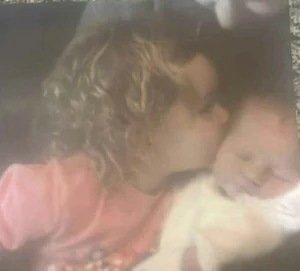
My connection to epilepsy is something I carry in my heart every single day. I’m running in memory of my sister who died at just eight weeks old. Losing her is a pain that never really softens.
It just becomes part of who you are. She wasn’t just my sister, she was a piece of my world. She was a best friend, comfort and most of all she was my only sibling when she passed away.
Epilepsy took her from us, and there’s a kind of heartbreak in that which words never quite reach. It’s the suddenness, the unfairness, the feeling that there was so much more life she deserved to live.
Why did you decide to do the London marathon for Epilepsy Action?
I needed to turn that grief into something that could still do good. I couldn’t let her story end with loss alone.
This is how I keep her with me, how I make sure she’s still part of something meaningful.
Every mile is for her. Every step is a way of saying her name without needing to speak it. It’s painful, but it’s also the closest thing I have to doing something for her now.
What do you think about when you’re running?
When I’m running, she’s always there. In the quiet moments, in the hardest miles, I think about her face, her smile and the amazing big sister she could have been to our other siblings.
There are moments it brings me to tears, even while I’m moving but I don’t stop. Because this is for her. And when my body starts to give up, it’s the thought of her that carries me forward. I run with everything I have because she can’t.
What do you hope your fundraising will help to achieve for people with epilepsy?
I hope my fundraising achieves something bigger than me, bigger than this race. I want change.
I want awareness so people understand just how serious epilepsy can be. I want better support, more research, and a future where fewer families have to feel this kind of loss.
If sharing her story, if running these miles, can help protect even one life, then she’s still making a difference in the world and that means everything.
What is your top tip to anyone running the marathon?
My top tip to anyone running the marathon is to hold onto your reason with everything you have. There will be moments where the pain feels overwhelming, where you question why you started, but that’s when your “why” matters most.
Run for something that truly means everything to you. Because when your legs feel like they can’t go on, it’s your heart that will carry you to the finish line.
You can read more about Mia-Rose’s story and support her fundraising on her fundraising page.
If you want to support Epilepsy Action next year, the ballot is now open for the London Marathon 2027.
More articles