



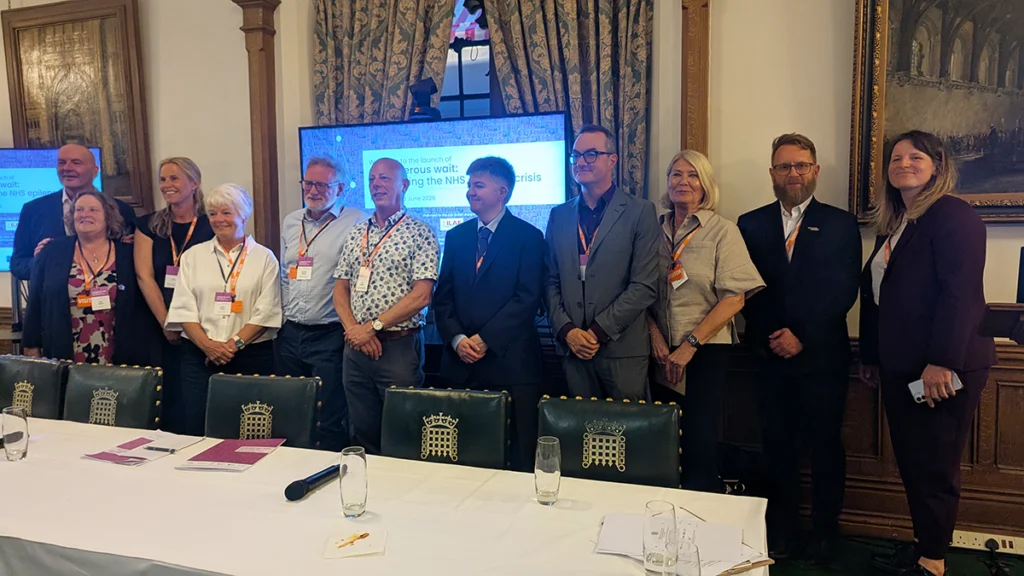
Epilepsy Action met with MPs, health professionals, charities and people affected by epilepsy in a Parliamentary event held earlier this month to discuss the recent report calling for urgent action from the government and NHS leaders to improve epilepsy services in the UK.
The event aimed to spotlight issues raised by the report, ‘A dangerous wait: addressing the NHS epilepsy crisis’, and open discussions around challenges and key next steps to improving healthcare for people with epilepsy.
The evening was hosted by MP Helen Maguire whose constituent, Barry Ahearn, lost his sister Abbie to epilepsy. Helen has worked with Barry to raise awareness around epilepsy and has raised issues in Parliament to try to ensure better support for people with epilepsy.
Barry, who has raised thousands for Epilepsy Action in Abbie’s memory, addressed the room, sharing Abbie’s story and the improvements in epilepsy care he wants to see happen.
He said: “For our family, everything happened incredibly quickly. One moment, we were trying to understand what epilepsy meant for Abbie’s future, and the next, we were planning her funeral.
“That’s why speaking about epilepsy and awareness matters so much to me. Because people living with epilepsy are more than their condition and families like ours are left asking questions no family should have to ask.”
“Epilepsy deserves to be taken seriously”
Barry shared that he didn’t know much about epilepsy before Abbie’s diagnosis and shared the importance of raising awareness. Speaking at the Parliamentary event, he said: “These stories are everywhere, and yet epilepsy still doesn’t receive the level of public understanding that many other conditions do. That needs to change.
“We need better awareness. We need people to understand seizure first aid. We need stronger support following diagnosis. We need continued research. And we need to ensure that families affected by epilepsy never feel alone.
“If there’s one thing I would ask everyone here tonight to take away, it’s this: epilepsy deserves to be taken seriously, not only medically, but socially, politically and publicly.
“Behind every diagnosis is a person trying to live their life. Behind every statistic is a family. And behind every awareness campaign is someone like Abbie – someone loved deeply and missed every single day.”
Concerns and conclusions from the Parliamentary event
 The discussion on the day focused on examples of good practice and the need for this to be available everywhere. The inequality of care was clear, with examples of areas where people struggle to access care raised, especially areas in the north of England.
Other concerns raised by the attendees included transition from children’s to adult epilepsy services, lack of continuity of care, limited access to epilepsy specialist nurses (ESNs), people needing to fund care privately to access specialists and the impact of epilepsy on mental health.
The group identified that important next steps were to continue to advocate for change and raise awareness of the issues highlighted by the report, build on the recommendations in everyone’s own work and build relationships and collaborate with others in the room and beyond to achieve change.
Alison Fuller, Epilepsy Action director of health improvement and influencing (pictured third from left with Epilepsy Action’s Tom Shillito, Helen Ross and Trustee Katie Stevens), said: “What we heard [in the report] was remarkably consistent: barriers to accessing care, delivering care and very real consequences for the people affected.
“We are meeting at a time when the NHS faces extraordinary pressures. But epilepsy cannot remain overlooked.
“That’s why this conversation matters. The issues highlighted in this report will be familiar to many people in this room. They are not new.
“The challenges are clear, the evidence is there and the time for action is now.”
The non-promotional report was initiated, organised and funded by Angelini Pharma with patient organisations, healthcare organisations and consultant neurologists.
More articles