



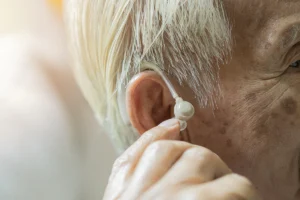
 The risk of dementia in people with epilepsy and hearing loss can be reduced by nearly a quarter (23%) by wearing hearing aids, according to new research presented at the European Academy of Neurology (EAN) Congress 2026.
The researchers explained that hearing loss is the largest modifiable risk factor for dementia, but that it isn’t yet clear whether hearing aids can reduce dementia risk.
Lead author Dr Carolina Ferreira-Atuesta and colleagues from University Hospital Zurich and the University of Liverpool set out to investigate the effect of hearing aids on dementia risk in people with hearing loss, as well as those with additional epilepsy, stroke, type 2 diabetes, chronic kidney disease, heart failure, migraine and osteoarthritis.
They used electronic health records from more than 250 million patients for the research. The only link they found between hearing aids and a reduced dementia risk was for people with epilepsy and hearing loss.
There was no such link for people with hearing loss alone, or those with the other co-occurring conditions included in this study.
In people with epilepsy and hearing loss, the reduction of 23% was found to be equivalent to one fewer case of dementia for every 37 people using hearing aids.
Why are hearing aids effective in epilepsy?
The researchers believe that this effect could be explained by differences in cognitive reserve – the brain’s ability to continue to function normally through ageing, conditions or injury. The Alzheimer’s Society says mental activity helps to build cognitive reserve, which reduces risk of dementia.
Suggesting a possible reason for the findings, Dr Ferreira-Atuesta said: “Most people with hearing loss have enough cognitive reserve to absorb the extra effort caused by hearing impairment, so correcting it may not have a large effect on dementia risk.
“Epilepsy is different because cognitive reserve is often already reduced, meaning that removing one additional source of strain may have a greater impact.
“There are several biologically plausible reasons why we might see this effect in epilepsy. The condition is associated with accelerated cognitive decline, temporal lobe epilepsy affects areas of the brain involved in hearing and some anti-seizure medications may worsen hearing.”
Dementia and hearing loss in epilepsy
People with epilepsy have a two-times higher risk of developing dementia compared to the general population, according to research. People with dementia also generally have a two-times increased risk of developing epilepsy, which can be higher depending on the type of dementia and how quickly it progresses.
Recent research confirms that people with temporal lobe epilepsy are more likely to have hearing problems, as the area in the brain affected by the epilepsy could be linked to hearing. The research by Dimitra Angeli and colleagues adds that unless it is well tested for by health professionals, it can add to people’s social isolation.
For more information on epilepsy and memory problems, visit the Epilepsy Action website.
More articles