


We exist to improve the lives
of everyone affected by epilepsy

Panayiotopoulos syndrome

This is also known as:

  • early-onset benign partial epilepsy with occipital paroxysms
  • idiopathic susceptibility to early-onset benign childhood seizures with electroencephalographic (EEG) occipital spikes.

This is a recently described epilepsy syndrome. It is said to be a relatively common type of epilepsy affecting about one in seven or one in 10 of all children with epilepsy. The most common age it begins is three to five years but it may affect children aged as young as one, and as old as 15 years of age.

Boys and girls appear to be equally affected. It does not usually run in families. However, more research needs to be undertaken in this epilepsy syndrome.

Early-onset benign partial epilepsy with occipital paroxysms (Panayiotopoulos syndrome) is different from the epilepsy syndrome called ‘benign epilepsy of childhood with occipital paroxysms (BECOP)’. In this other syndrome (BECOP), the children are usually older and the seizures consist of problems with vision and flashing lights and are usually accompanied by headaches. 

Symptoms

The main seizure type is known as ‘autonomic’. The child may have a sudden change in behaviour and then they become pale, complain of feeling sick and will usually vomit. The pupils of the eyes often become very large (dilated) and there may be a lot of sweating and drooling (these are the ‘autonomic’ features).

The child may become unresponsive and their head may turn and become fixed to one side. It may remain turned to the side for many minutes. Very often the seizure will then end by jerking movements (called clonic movements) down one, or occasionally both, sides of the body. After the seizures the child will be upset and may sleep.

Over two thirds of the seizures will occur in sleep; the sleep may be during the night or during a day-time nap. The seizures are often long-lasting and may last 20, 30 or even 60 minutes. Even following the long seizures, and after the child has woken up, they will be back to normal.

The seizures are very infrequent. Many children will have just one or two seizures while others may have four or more. 

Diagnosis

The diagnosis of early-onset benign partial epilepsy with occipital paroxysms or Panayiotopoulos syndrome is made on a detailed account of the child’s symptoms.

Important features in making the diagnosis are: the episodes usually occur during sleep and are nearly always accompanied by autonomic features and vomiting. The child’s age is also important, as most seizures occur in young children.

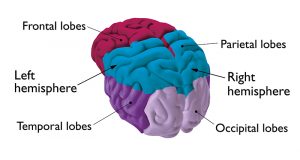
The electroencephalogram (EEG) often shows abnormal activity (called spikes) on both sides of the brain and usually towards the back of the head (in the part of the brain called the occipital lobes).

Sometimes the EEG may only show the abnormality if it is carried out when the child is sleeping. However, the EEG may also be normal in up to a quarter of children with this epilepsy syndrome.

Brain scans (CT and MRI) are usually normal.

Treatment

Not every child needs to be given anti-epileptic drugs. This is because the seizures occur infrequently and because most children will stop having seizures soon after the seizures start.

An anti-epileptic drug is usually prescribed if the child has had more than three or four seizures and particularly if the parents are worried.

The anti-epileptic drugs most commonly used are sodium valproate (Epilim) or carbamazepine (Tegretol); the newer drugs may also be effective, but this is not known for sure.

Prognosis (outlook)

Most, if not all children with early-onset benign partial epilepsy with occipital paroxysms or Panayiotopoulos syndrome, will show normal development in the first few years of life. Most will also have no learning or behaviour problems. Even the longer seizures do not cause any problems and it is not thought that the seizures are dangerous.

Nearly all children will stop having seizures within two or three years after the seizures first started. This is called a ‘remission’ of the epilepsy. The remission of the epilepsy is spontaneous (it happens of its own accord) and is not affected by the use of anti-epileptic drugs.

Finally, it seems to be very rare for a child with this type of epilepsy to have seizures either continuing into, or re-starting, in adult life.

Support organisation

Contact a Family, 209-211 City Road, London, EC1V 1JN, telephone 0808 808 3555, http://www.cafamily.org.uk/

Because this page is written by an epilepsy healthcare professional and not by Epilepsy Action, it falls outside the requirements of the Information Standard. 

Our thanks

Epilepsy Action is indebted to Dr Richard Appleton, a Consultant Paediatric Neurologist who specialises in children’s epilepsy, and to Dr Rachel Kneen, Consultant Paediatric Neurologist and Dr Stewart Macleod, Specialist Registrar in paediatric neurology, at Alder Hey at Alder Hey Children’s Hospital, Liverpool, who have kindly prepared the information on this page.

This information is exempt under the terms of The Information Standard.

  • Updated July 2009
    To be reviewed December 2013

Comments: read the 13 comments or add yours

Comments

My son was diagnosed with this condition last Friday. The info on this site has been really enlightening. Although brief- it captures key areas. My son has been prescribed Carbamazepine because he was getting the seizures more and more frequently. He first had one in Dec 2010, then Dec 2011- after which he had two in Jan 2012 and three in Feb 2012. Thank God, he has now been diagnosed. It was very distressing for all of us in the family (not least him). Unfortunately- he has behavioural problems and learning difficulties- so our journey has just begun. He'll be eight years old in May

Submitted by A. Fidelis on

My daughter has just been diagnosed with this type of seizure today, she had a week of having two or three a day, she has not been prescribed any medication yet though. But my worry is how to tell when she is having an episode in her sleep, as she only had one seizure which included the clonic movements and this was while she was awake, on the other occasions the symptoms were more of a fainting episode and sickness feeling, also pins and needle in the face

Submitted by Bernadette on

It’s a worry for parents when their child has seizures during the night. Some parents use bed alarms to alert them if a seizure happens.

You can get bed alarms that sense different things, such as unusual sound, movement or moisture. With Panayiotopoulos syndrome the child tends to drool or vomit, and most seizures usually end with a jerking movement. You could see if there is an alarm that would be suitable for your daughter’s symptoms. For details on bed alarms, please contact the Disabled Living Foundation. They have details on a wide range of bed alarms, and hopefully there will be a suitable one for your situation.

If a bed alarm isn’t suitable or available, some parents we’ve spoken to, have used a baby intercom that can pick up sound. This may be a noise the child makes during their seizure. Or there could be something on their bed that makes a noise when the child moves. Someone has told us about tying small bells on to the bed.

You could talk this over with your daughter’s epilepsy nurse or doctor. They may have some other ideas too.

Diane Advice and Information Team

Submitted by AndyWeb on

After posting here back in march we have now had the official diagnosis and as I suspected it is panayiotopoulos syndrome. Unfortunately despite being on the highest dose of carbamazapine our 4 year old daughter has continued to have seizures once a fortnight all during her sleep within the first hour of falling asleep. These have however become a little milder and she has not vomited during one for a while and it is mainly head and eyes etc. they have been lasting about 6-8 minutes! When she wasnt on medication the seizures were only every 8 weeks or less????! Does anyone else have experience of a child with this syndrome having frequent seizures and/or continuing to have them whilst on anti epileptic medicine?? I would love to hear from someone as I feel really nervous as most sites state that the seizures are infrequent and only 1 or 2 over the whole course of the condition. Kindest regards

Submitted by Lindz on

Hi Lindz - our son was diagnosed 3 years ago with benign occipital epilepsy - we are in the US so we could never get our neuro to diagnosis his episodes as PS (even though it fits him to a T). But I just wanted to say we took him off Keppra after 8 months because the seizures were getting more frequent (the higher the dose, the more seizures). As our neuro explained, some medications suppress the wrong part of the brain, thus allowing the seizure threshold to be even lower. So that medication is not targeting the right part for your child. We were told it would be lots of trial and error until we found the right drug. I didnt buy it and took him off everything. We were doing awesome until about 2 months ago. He was seizure free/medicine free for almost 2 years. And within the past 5 months he has had 2. We are not sure if this has progressed, or migrated to something else, but it is frustrating all over again. I still dont think I will do medication as he is still growing and developing. neurologically. Our neuro also forewarned us that often times it gets worse before it gets better - reassuring, huh?! Hang in there!

Submitted by SusanS on

Also wanted to mention we have got a video baby monitor so we can see her in the evening and when she's in bed. I can honestly say it has been a god send and I would recommend buying one. It cost around £100. Hope this is helpful.

Submitted by Lindz on

My son who has just turned 10 has had a form of epilepsy since he was 5, his neurologist mentioned this syndrome and have to say the symptoms do fit him very well, always being sick before having a convulsive siezure, he tends to have just 1 siezure a year but he is always admitted to hospital because the siezure does not stop usually lasting for 45mins (the time it takes from start to the time he reaches hospital) I was just wondering if anyone else has had a child with this syndrome that has gone on for many more years than the usual 2-3?? I am really hoping he will grow out of this condition but as time goes on im not sure he will. We have both a baby monitor and bed sensor as it always happens at night.....also thinking of investing in some kind of night vision camera......as its such a worrying time.

Submitted by Carolyn Bolton on

My son has P S. Diagnosed about a year ago. He's six. 5 siezures so far some short some multiple some very long lasting. Alway ending up in a& e with diazepam which always work. Tend to have very long lasting siezures last one about 80 min. Very scary. Still decided not to go for a long term meds as his episodes are so infrequent. Last gap was 6 months. Scared of the side effects and that the meds may not necessary stop the siezures anyway. Am I doing the right thing? Do other kids with P S tend to have any other health problems?

Submitted by Babs on

Hi Babs

I’m not surprised the long seizures feel scary. The decision whether or not to go ahead with treatment for your child is a really difficult one for any parent. As it says on our web site, sometimes epilepsy medicine is not necessary with this syndrome, if a child only has a few seizures. But you might want to discuss the risks of the longer seizures with the neurologist. And whether epilepsy medicine could limit the length of your son’s seizures.

You could visit the website Making Contact, to look for other families where a child has the same diagnosis. This is a section of the Contact a Family organisation, which supports people with disabled children.

Also you may be interested in our online community, forum4e. This is for people with epilepsy and carers of people with epilepsy. There are a number of parents and carers on there.

I hope these suggestions will help you to make a decision you can feel comfortable with.

Cherry
Advice and Information Team

Submitted by Cherry@Epilepsy... on

My son is 10 and has just been diagnosed with this syndrome, he has been on strong painkillers for over a year for migranes as this what the doctors thought he was suffering from. His seizures can last between 2 to 3 hours which is severe vomiting and being confused and memory loss. He he takes one between every 6 to 8 weeks, we are now waiting on an EEC to see what course to take next. But we are glad we have finally found out what is wrong with our son.

Submitted by Jac on

My daughter was diagnosed with this syndrome at age of 7.
They prescribed Carbamazepine and it didnt work, she was still having problems when sleeping. untill we found a doctor In Argentina that prescribed her OSPOLOT (Sulthiame) and never again.
Her epilepsy type is benign and partial, and she had only one big seizure. But was too long and really scary, and just like this article says, got pale, feeling sick and wanting to throw up.
Now she's 12 and we can notice on the exams (night studies or Polysomnography) how its dissappearing, we make tests every 6 months.
Hope you find the right doctor and the medication too.
Kind regards and best wishes
Mstar

Submitted by Mstar on

My 4 year old grand-daughter has PS and after the first attack had nothing further for 6 months. She then had another attack and was given tegretol which after a few weeks she refused to take. She was then given another medication which she refused and now takes ospolot tablets as they have no taste. However, she is getting more frequent attacks on the medication than she did without any during the first 6 months. How can this be?

Submitted by Diane Green on

Hi Diane

It is really difficult to say why someone has seizures in the pattern they do. Of course your grand daughter’s seizure activity could be directly related to the epilepsy medicine. But it may be that her seizures would have changed or increased anyway. It may be that this is not the best medicine for her to be on. Hopefully the epilepsy nurse specialist or doctor will be able to provide some answers, and the right medicine is found for her soon.  

Cherry
Advice and Information Team

Submitted by AndyWeb on

Contact Author

CAPTCHA
This question is for testing whether you are a human visitor and to prevent automated spam submissions.