




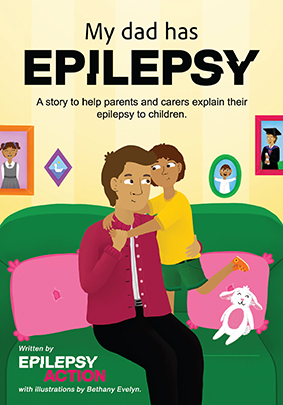
A story for parents, guardians and carers to help them explain epilepsy to their children.
What would you like to find out about today?
We use the word ‘parent’ on this page for simplicity. But this information is for anyone looking after babies and young children, including grandparents, carers and guardians.
These tips have been reviewed by healthcare professionals specialising in epilepsy.
If you have recently given birth, we have more information about labour, birth and after the baby is born.
Key facts
- Many new parents get tired, lose sleep and miss meals. Try to remember to look after yourself as well as your family, to reduce the risk of seizures
- Try to look after your mental health as well as your physical health. We are here to support you if you need it
- Epilepsy can come with some safety risks. But by putting simple safety measures in place, you can reduce these risks for both you and your child
- You can teach your child about seizures and first aid. We have resources to help you explain epilepsy to children
- NHS services are available to help support parents of young children
- Some parents may be able to claim financial support to help them care for babies and young children
Single parenting with epilepsy
Many of the tips on this page will apply to any kind of family set up. But being a single parent brings its own challenges. Try to:
- Build a support network of friends, neighbours, and family. We have more information about how they can help on this page
- Have an age-appropriate seizure safety plan with your children
- Use medical alert devices or apps
- Stay in touch with your healthcare providers to make sure your epilepsy is as controlled as possible
- Reach out to us. We’re here for you if you need information, support or a listening ear
How do I look after myself and a young baby?
Caring for babies and young children is not easy. Many parents lose sleep, miss meals when they have young children.
For people with epilepsy, these things can increase the risk of having a seizure. That’s why it’s important to look after yourself and keep your epilepsy as well controlled as possible. Try to:
- Take your epilepsy medicine exactly as prescribed and do not skip doses
- Set yourself reminders to reorder your medication from the pharmacy before you run out
- Get as much sleep or rest as you can
- Try to reduce stress and ask for help when things feel overwhelming
- Eat a healthy, balanced diet and try not to miss meals
- Learn your seizure triggers and plan ways to avoid or manage them
Practical tips that may help:
- Use an alarm clock, phone alarm or pill reminder to help you remember when to take your epilepsy medicine. The Disabled Living Foundation has information about medication alarms and reminders
- Use a pill box or organiser
- Share night-time feeds with a partner, family member or friend if possible, so you can get more sleep. If you’re breastfeeding, you could try expressing before bed for night feeds
- Prepare meals in advance, so you always have something ready to eat. You could batch cook some meals and freeze them, or make some packed lunches that you do not need to heat up.
- Go to all your medical appointments
- Keep a seizure diary. This can help you track things like your epilepsy medicines, side effects, possible triggers and medical appointments
Parenting with epilepsy and your mental health
As well as having some concerns about safety, many parents tell us they worry about the emotional impact epilepsy can have.
Parents have told us they sometimes worry about things like:
- If epilepsy will affect their ability to be a good parent
- How their child feels about having a parent with epilepsy
- How epilepsy may affect their relationship with their child
Mental health problems are very common during and after pregnancy, whether you have epilepsy or not. Your mental health and wellbeing are important. Find out more about looking after your wellbeing and how to get more support.
Will my child also develop epilepsy?
Most children of people with epilepsy do not develop epilepsy. But some people may worry about this. We have more information about genetics and epilepsy.
Your risk of SUDEP after having a baby
SUDEP stands for Sudden Unexpected Death in Epilepsy. It means there is no clear reason why a person with epilepsy has died. SUDEP is rare, affecting around 1 in every 1,000 people with epilepsy each year.
The risk of SUDEP increases during pregnancy and in the first 12 months afterwards. There may be many reasons for this, including having a seizure. Sometimes lack of sleep or missing epilepsy medicines can cause an increase in seizures.
Your individual level of risk will depend on the type of seizures you have and how well-controlled they are.
Talk to your epilepsy specialist or epilepsy nurse if you have any concerns. We also have more information about SUDEP and what you can do to reduce any risks.
Talking to other parents with epilepsy
Many parents find it helpful to talk to others in a similar situation. You can meet other parents affected by epilepsy in our Parent and Carers Support Group online.
Keeping a baby or young child safe when you have epilepsy
Epilepsy can come with some safety risks. But by putting simple safety measures in place, you can reduce these risks for both you and your child.
Everyone’s epilepsy is different. What is right for you will depend on how well your epilepsy is controlled and what your circumstances are.
Your GP, epilepsy specialist, midwife or health visitor can support you.
- Always keep your medicines out of the reach of children
- Always place your baby on the floor or in a safe cot if you feel a seizure may be coming on. If you have space, you could keep a cot in your living space so it is easily accessible
- Use a pram or pushchair instead of carrying your baby for longer distances
- Keep your home as clutter-free as possible to reduce the risk of falls
- If possible, ask somebody else to carry your baby up and down stairs. If it’s not possible, carry them in a car seat with the straps secured. This will help to protect them if you fall during a seizure
- If your baby is crawling or has started to walk, consider using properly fitted safety gates at entrances to spaces that might be dangerous for your child like the kitchen, or stairs
- Try to have a plan for someone else to look after the baby if you need to rest after a seizure.
- If you are going to be alone with your baby, ask a friend or relative to phone you or call round at an agreed time, to check that you and your child are okay
- Do not leave the keys in the locked door, and do not use bolts or chains. This will help make sure people can get in, if you need any help. Think about giving a spare key to a neighbour or getting a key safe for trusted adults to use. Key safes are available from various high street and online suppliers including the >Disabled Living Foundation
- Do not use irons, curling tongs or hair straighteners when you are alone with a baby or young child. They stay hot enough to burn a small child even when they have been turned off for some time
-
Safe sleep for babies when you have epilepsy
- It is best not to share a bed with your baby or young child if you have epilepsy. There is a risk that your baby could be injured if you have a seizure while sleeping, or if you take medicine that makes you feel sleepy (drowsy).
- There is some safe sleep advice that applies to all parents, whether they have epilepsy or not.
- For example, do not fall asleep on a sofa or armchair with a baby of up to 12 months old. This can increase the risk of sudden infant death syndrome (SIDS).
- The safest place for your baby to sleep during the first 6 months is in their own cot, lying on their back, in the same room as you.
The Lullaby Trust has more information about safe sleep.
-
Bathing, changing and dressing a baby safely when you have epilepsy
- Do not give your child a bath unless there is another adult with you. If you are by yourself, wash them with water from a shallow bowl, using a cloth or sponge. Make sure the bowl is out of their reach
- Use padded changing mats and change your baby’s nappies on the floor rather than on raised surfaces, such as a changing table or bed
- Keep nappies and changing materials on each floor of the house. This is safer than carrying the baby up and down stairs
- Public baby changing facilities are often at waist level. You could carry a travel changing mat to use on the floor if this makes you more comfortable
The Royal Society for the Prevention of Accidents (RoSPA) recommends that baby bath seats are not used. By leaving you hands-free they can give a false sense of security. But they are not safety devices.
Never leave your baby alone in a bath, even for a second.
-
Safe feeding for babies when you have epilepsy
- Sit on the floor, on a thick rug, with your back well supported while feeding your baby. This should reduce the risk of them falling onto a hard surface if you have a seizure
- It is easy to forget things when you have young children. Lack of sleep, stress or side effects of epilepsy medicines can all cause memory problems. It may help keep a note of when you fed your baby and how much they had. If you are breastfeeding it can help to note which breast you last fed from. There are several different apps that could help you with this
- Label food and milk containers with the date and time you prepared it
Can I breastfeed safely with epilepsy?
We have more information about breastfeeding and epilepsy
-
Feeding a young child when you have epilepsy
- Strap them into a low chair, rather than a highchair
- If you always fall to the same side during a seizure, make sure they are at the opposite side
- Try to keep a supply of ready-made food for the child, in case you do not feel able to cook
- Avoid feeding your child when you are standing or walking
Keeping a young child safe when you are outside
-
Using prams and pushchairs when you have epilepsy
There is no official advice about what kind of pram or pushchair to use when you have epilepsy. But here are some tips on choosing one.
- Choose a pram with a lot of padding, which could protect the baby if you fall
- Some prams and pushchairs have an autostop brake that automatically engages the parking brake when you release your grip
- Tie a label with some emergency contact numbers to the handle of the pram or pushchair. Epilepsy Action have a free epilepsy ID card you can download or order
- Whether buying a pram or pushchair new or second-hand, always look for a reference to a safety standard
- Try to buy prams from retailers you know or trusted brands. Stick to known retailers or trusted brands or make sure you see the pram before you buy anything second-hand
The Royal Society for the Prevention of Accidents (RoSPA) has more information about pram and buggy safety.
-
Using baby carriers and baby slings when you have epilepsy
Baby carriers and slings can be used to carry your baby close to your chest.
There is no official advice about using a baby carrier or sling when you have epilepsy. You may decide whether to use a sling based on how epilepsy affects you.
For example, a sling may not be suitable if you have seizures that cause you to fall because this may hurt your child.
Some parents carry their babies in a padded carry cot or moses basket when they are at home alone.
RoSPA has more information about baby sling safety.
-
Using child reins, harnesses and wrist straps when you have epilepsy
There is no official advice or recommendations for using a child rein or harness when you have epilepsy. Some people use them as an extra layer of safety in case they feel a seizure coming on to keep their child close. But using reins is a personal choice.
-
Keeping a child safe in open spaces when you have epilepsy
- Try to let someone know where you are going, and what time you expect to be back
- Avoid unguarded water such as ponds, streams, swimming pools, or rivers if you are alone with a child
- Try to avoid other dangers such as steep steps, roads or railway lines
- Go with another adult if you think it would be safer
- Try to choose busy or contained places for play. For example, fenced parks or soft-play areas with seating and staff nearby
- Try to take your baby or young child out during a time when you are less likely to have a seizure
- You and your child could carry contact details of a trusted adult to contact in an emergency. You could do this on your mobile phone, which your child could dial, if old enough. Epilepsy Action have a free epilepsy ID card you can download or order. We have more information about medical ID products
-
Driving and childcare logistics as a parent with epilepsy
There are different rules for driving with epilepsy, depending on the type of seizures you have. If you cannot drive because you’ve had a seizure, this can impact you as a parent. It may mean that you:
- Have difficulties getting your children to nursery or school
- Worry about if your child is ill and needs urgent care
- Find out of school activities harder to manage
It may help to:
- Tell your children’s nursery or school about your condition. They may be able to be flexible with drop off or pick up times
- Make sure you have reliable taxi company’s contact details ready
- Ask family, friends and other parents for help
- Apply for your Disabled Persons Railcard and bus pass. Children can often travel for free or for a discounted rate
More safety information
We have information about keeping safe when you have epilepsy.
NHS also has more information on baby and toddler safety. Your GP, midwife or health visitor should also be able to help.

Teaching a young child about epilepsy, seizures and first aid
You may not want young children to feel responsible your safety, which is understandable.
You know your child best and what they can understand. So, it is up to you how much you tell them about epilepsy and how it affects you.
But it may be helpful to teach them from an early age about how to get help if anything happens.
For example, you could teach them:
- How to call 999
- Their home address
- How to open the front door in an emergency
Try to reassure them that calling 999 isn’t scary. Someone will answer the phone quickly, help them, and stay on the phone until they are safe.
For when you are out and about, you could teach your child:
- To stay next to you in case you have a seizure
- To sit down with you if you need to sit down
- How to ask another adult to help. You could give them a simple script, such as “my mum has epilepsy, please call 999”
Children’s books about epilepsy
When you are ready, you can use our children’s books to talk to children about your epilepsy. Produced in collaboration with parents with epilepsy, this book aims to normalise epilepsy and reassure children. It can also help you explain:
- What epilepsy is
- How it affects you
- What children can do to help if you have a seizure
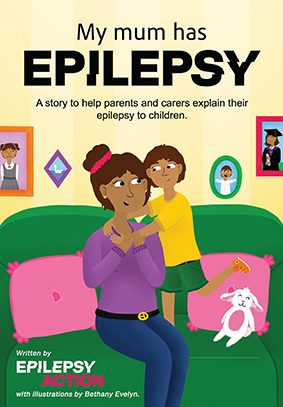
My mum has epilepsy
A story for parents, guardians and carers to help them explain epilepsy to their children.
What can family and friends do to help a parent with epilepsy?
Family and friends may be able to help with practical parenting support. For example, they could:
- Help with school runs, nursery pick-ups, or after-school activities
- Babysit during medical appointments
- Take over childcare temporarily if you’re feeling unwell or recovering from a seizure
- Help with bath time or other tasks that may carry safety risks
- Help with meals, cleaning, or shopping
- Encourage rest when needed
- Help you manage your medication routine
- Look after your child so you can sleep
- Mak meals, including stocking up the freezer
- Give you their phone number for you or a child to ring and ask for help
- Hold a spare key and letting you know about times when they could come over in an emergency
It would also help for them to understand how epilepsy affects you. For example, they could:
- Understand the type of seizures you have
- Learn basic seizure first aid
- Know what your triggers and warning signs are
What can support services do to help?
Some parents and carers may qualify for extra help to look after children. NHS has information for parents about social services and other support that may be available.
You can also ask your healthcare professional for a referral to Home-Start UK. This is a charity that provides support to families with young children going through a challenging time.
Financial support to help care for a child when you have epilepsy (benefits)
Depending on your needs and circumstances, you may be able to claim benefits to help you care for your child.
We have more information about benefits for people with epilepsy.
-
Sources
Clinical Knowledge Summaries (2025) Epilepsy. Available at: https://cks.nice.org.uk/topics/epilepsy/
(Accessed: 13 February 2026).The Royal College of Obstetricians and Gynaecologists (2017) Maternal mental health: women’s voices. Available at: https://www.rcog.org.uk/globalassets/documents/patients/information/maternalmental-healthwomens-voices.pdf
(Accessed: 26 February 2026) .Dreier, J.W., et al. (2020) ‘Epilepsy risk in offspring of affected parents: a cohort study of the “maternal effect” in epilepsy’, Annals of Clinical and Translational Neurology, 8(1), pp. 153–162. Available at: https://doi.org/10.1002/acn3.51258
NHS (2025) Sudden infant death syndrome (SIDS). Available at: https://www.nhs.uk/baby/caring-for-a-newborn/sudden-infant-death-syndrome-sids/
(Accessed: 13 February 2026).RoSPA (no date) Keeping kids safe: bathtime safety tips for children. Available at: https://www.rospa.com/health-and-safety-resources/keeping-kids-safe-hub/bathtime
(Accessed: 26 February 2026).
More information and support
Barnardo’s
Barnardo’s run more than 650 specialist services across the UK, and campaign to change the way the system works for the better.
Best Start in Life
NHS advice on pregnancy, babies and supporting your toddler’s development.
Family Action
Supporting families all over the country through local services delivered from Family Action offices, in community spaces, and in homes.
Family Lives
Family Lives was formed by volunteers, with the aim of ensuring that all parents have somewhere to turn before they reached crisis point.
Gingerbread
Advice and practical support for single parent families
Home-Start
Support for families with young children, including details of local services.
National Childbirth Trust (NCT)
Information, support and classes for parents.
We're here to help
Got any questions?
Our expert advisors are here for any questions you might have about living with epilepsy.
This information is currently being reviewed and will be updated soon.
Was this article helpful?