



Key points
- EASEE® stands for Epicranial Application of Stimulation Electrodes for Epilepsy
- This medical device can reduce focal seizures in some people with drug-resistant epilepsy
- EASEE® is a small device, implanted under the scalp. It delivers electrical signals to the part of the brain where your seizures start
- The surgery to implant the device is simpler than other types of epilepsy surgery. Unlike other devices, EASEE® can be removed completely if needed
- You are recommended to take epilepsy medicines alongside the EASEE® device. You may be able to reduce the dose or number of epilepsy medicines in the long run
- The EASEE® device is not currently recommended as a treatment for children with epilepsy
- EASEE® is a new treatment available on the NHS. However, it is not available in all hospitals in the UK. Talk to your epilepsy specialist to find out if it could be an option for you
What is the EASEE® Device?
EASEE® stands for Epicranial Application of Stimulation Electrodes for Epilepsy. You say it like ‘easy’.
EASEE® is a small medical device that can help some people who have focal seizures. The device sends electrical signals to calm the brain and helps stop seizures before they start. It has been shown to be effective in two clinical trials. A clinical trial is a research study where people help test new medical treatments to see if they are safe and effective.
EASEE® is a new treatment for epilepsy and was first offered on the NHS in 2025.
How Does It Work?
EASEE® is a treatment for focal epilepsy. In this type of epilepsy, seizures start in one part of the brain and spread to other parts of the brain.
Doctors may be able to find where focal seizures start by doing several tests. These could be an MRI scan (magnetic resonance imaging) and EEG (electroencephalogram). They will combine these tests with other information about you to find out if you could benefit from treatment with EASEE®. For example, your triggers and what happens during your seizures.
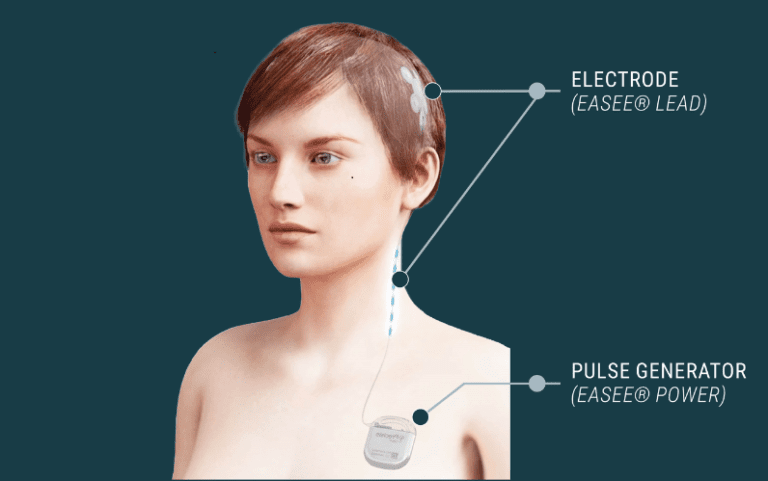
The EASEE® system consists of three parts:
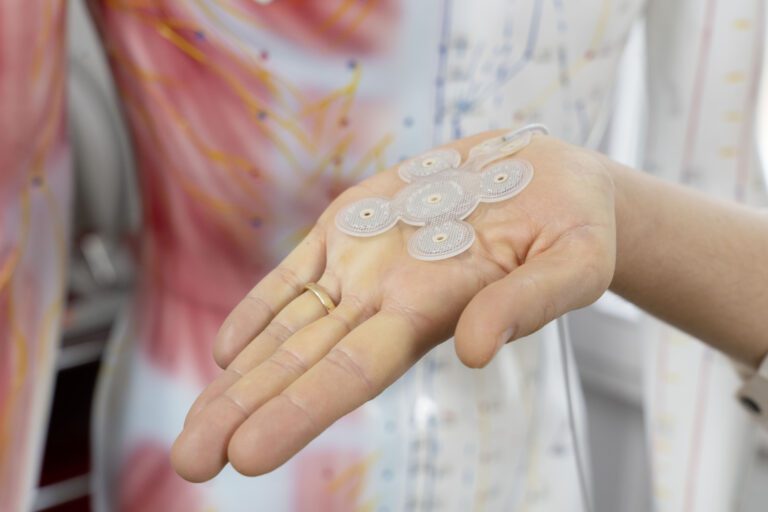
- A floppy electrode which is attached to your skull under the skin of your scalp
- A cable which connects this electrode with a small battery
- A battery compartment called a generator which is placed under the skin of your shoulder
The electrode does not directly touch your brain. The device is thin and about 5cm long. A surgeon will insert it by making a small cut in the scalp while you are under general anesthetic. This means that you will be asleep during the surgery. Some of the hair on your head will need to be shaved off where the device will be inserted. Most people should be able to go home the day after the operation.
The EASEE® device sends electrical pulses to the part of your brain where seizures start. These electrical pulses can reduce seizures and stabilise brain activity to prevent future seizures. You cannot feel these signals. In many people, it is not possible to see the device through the skin from the outside.
You will also be given a handheld device so that you can deliver additional stimulation if you need it. This may be helpful if you have focal seizures where you are still aware what is happening. Or, if you experience auras before seizures start.
Who Can Use EASEE®?
EASEE® might be suitable for adults who have drug-resistant focal epilepsy. This is where you have tried at least two epilepsy medicines and still have seizures. Or, if you have severe side effects from your medicine. Find out more about drug-resistant epilepsy.
EASEE® may also be an option if other types of epilepsy surgery are not suitable for you.
The EASEE® device is not currently recommended as a treatment for children with epilepsy. There are clinical trials in progress looking at its use in teenagers.
There are other surgical treatments options available for children.
EASEE® is available on the NHS, but it is not available at all hospitals yet. Talk to your epilepsy specialist to find out if the device might be right for you.
You can find information about where the treatment is available on the Precisis website or social media.
What are the benefits?
- EASEE® can reduce the number of seizures that people have, when used alongside epilepsy medicine. Two small studies showed that around 6 in 10 people had at least 50% fewer seizures after using the device for 2 years.
- The operation to insert the device is much simpler than other types of surgery for epilepsy. The operation takes about 45 minutes to 1.5 hours
- Personalised treatment. The device can be placed wherever it is needed in the brain and the signals can be adjusted to suit each person
- You are mostly unable to see the device under the skin and it does not restrict your movement
- It is safe during an MRI scan. You can still have MRI scans, but you must tell the hospital staff about the device. On the implant card you receive after the procedure you can also find a link to MRI guidelines to share with your radiologist
- EASEE® is reversible. This means that you can get the device fully removed if it does not work for you
What are the risks?
Like any medical procedure, there are some risks:
- Swelling or pain after surgery where the device is placed. This usually goes away on its own
- Infection where the device was inserted. You may need antibiotics to treat this
- You may need another small surgery if the device moves or becomes disconnected. You will also need another surgery if the battery needs replacing. The makers of the EASEE® say that the battery should last several years
- For some people, the EASEE® device does not reduce the number of seizures they have
- General anesthetic can sometimes cause complications, but these are rare. You can talk to your healthcare team about these risks
What should I expect after the surgery?
You will have follow up appointments with your epilepsy specialist. They may have to adjust the settings on the device to make it work better for you.
Where can I find out more?
Your neurologist or epilepsy nurse can tell you if EASEE® might help you. This treatment is available on the NHS, which means it is free. However, it is not yet available in all hospitals in the UK.
You can find out more about this treatment and where it is available on the Precisis website, the company that makes EASEE®. The Epilepsy Action helpline can also help answer your questions about the different treatments for epilepsy.
Frequently asked questions
-
Can I have an MRI scan with the EASEE device?
Yes, it is safe to have an MRI scan if you have the EASEE® device implanted. But you should let the MRI department know that you have the device and share the MRI guidelines link with them.
-
What should I do if I’m interested?
Talk to your neurologist or epilepsy nurse. They can tell you if EASEE® might help you. Not all hospitals offer it yet, but it is available on the NHS in the UK.
-
Is EASEE® suitable for children?
EASEE® is currently only available for adults on the NHS. There are clinical trials in progress looking at its use in teenagers.
-
Can I go through airport security scanners with EASEE®?
You should tell airport security that you have the EASEE® device implanted and show them your medical implant identification card. When possible, you should walk through the centre of the scanner and leave the scanner area as soon as possible.
Got more questions?
Our expert advisors can help you with any questions you might have about EASEE or any other ways to manage your epilepsy.
Call 0808 500 5050.
This page is printable and can be downloaded. We also have accessibility tools available at the top of the page. These tools can also translate this page into different languages.
Thank you to our expert reviewers and health information volunteers, for contributing to and reviewing this content. Thank you also to everyone who shared their experiences for the quotes used on this page.
Find out more about how you can help us create our health information.
-
Sources
Schulze-Bonhage, A. et al. (2025) ‘Two-year outcomes of epicranial focal cortex stimulation in pharmacoresistant focal epilepsy’, Epilepsia, 66(9), pp. 3242–3253. Available at: https://doi.org/10.1111/epi.18448.
University College London Hospitals NHS Foundation Trust Neurosurgery (2025) – Guide for Epilepsy patients considering implantation of EASEE device. Available at: https://www.uclh.nhs.uk/patients-and-visitors/patient-information-pages/neurosurgery-guide-epilepsy-patients-considering-implantation-easee-device (Accessed: 12 December 2025).
EASEE (no date) Informations | For Patients. Available at: https://easee.precisis.de/en/patients-and-caregivers/information/ (Accessed: 12 December 2025).
EASEE (no date) For Healthcare Professionals. Available at: https://easee.precisis.de/en/health-care-professionals/studies/easee4you/ (Accessed: 12 December 2025).
NHS (2024) General anaesthetic. Available at: https://www.nhs.uk/tests-and-treatments/general-anaesthesia/ (Accessed: 12 December 2025).