




Find out more about seizures
Key facts about seizures
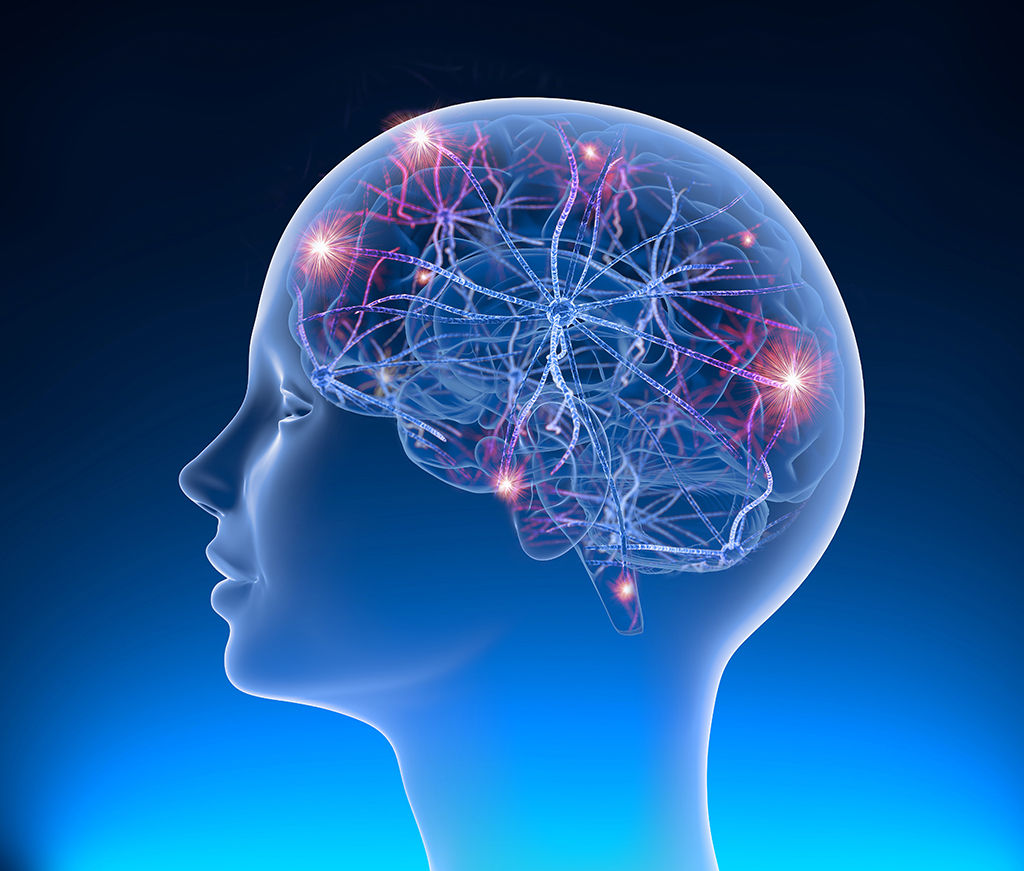
- An epileptic seizure is a sudden burst of electrical activity in the brain. This creates a temporary disruption of the normal messages in the brain
- There are lots of different types of seizures in epilepsy. Each type of seizure has different symptoms or features
- Some people with epilepsy only have one type of seizure. Others have more than one type
- Seizures usually last between a few seconds and several minutes
- Some people describe getting a warning before a seizure, often called an aura. This is the start of a seizure
- There are also seizures that are not epileptic. Functional or ‘dissociative’ seizures are a common type of seizure that are not caused by epilepsy
What are epileptic seizures?
An epileptic seizure happens when there is a sudden, intense burst of electrical activity in the brain. This causes a mix up in messages between the brain and the body. It can cause changes in how the body thinks and works for a short time.
All of us have the potential to have a seizure. But people with epilepsy have a tendency to have repeated seizures. These are called ‘epileptic seizures’. There are other types of seizure too.
Epilepsy and epileptic seizures can be caused by many different things. For approximately 1 in 2 people with epilepsy (50%), doctors don’t know the cause.
How many people have epileptic seizures?
As many as 4 in 100 people (4%) will have an epileptic seizure in their life. But not everyone who has a seizure will go on to have epilepsy.
Around half of everyone who has a single epileptic seizure will go on to have at least one more seizure within the next two years.
What happens before an epileptic seizure?
Many people have particular thoughts, feelings or sensations before the main part of their seizure starts. This is actually the beginning of a focal seizure. It is sometimes called an ‘aura’.
For some people it can act like a warning and it gives them time to get somewhere safe. Auras can happen on their own or they can progress to a different type of seizure.
Not everybody gets auras before seizures. Some people have no warning before their seizure starts.
What happens during an epileptic seizure?
Seizures can be very different from person to person. The symptoms you have depend on the area of the brain that is involved during the seizure.
During an epileptic seizure, you might:
- Lose consciousness, or you might stay aware of what’s happening around you
- Have strange sensations or feelings
- Have movements you can’t control
There are lots of different types of seizure. Some people only have one type of seizure, others have more than one type.
What does 'ictal' mean?
‘Ictal’ means ‘during a seizure’.
‘Pre-ictal’ means ‘before a seizure’. ‘Post-ictal’ means ‘after a seizure’. You might sometimes hear healthcare practitioners use these terms.
What happens after an epileptic seizure?
What happens after an epileptic seizure depends on the types of seizures you have. With some seizures, you can recover very quickly and carry on with what you were doing straight away. People around you may not even notice that you have had a seizure.
But with some seizures you can take a while to feel better. You may have a headache or feel sleepy and need time to rest and recover. Some people feel confused. Or you may have issues with memory and thinking processes.
Occasionally, a small number of people may behave differently for a while during or after their seizure. You may feel very angry or behave aggressively without realising. Or, you may see or hear things that aren’t there or have unusual thoughts. If this is severe, it is sometimes called ‘ictal psychosis’ or ‘post-ictal psychosis’ and it can be treated.
How are epileptic seizures classified?
Doctors place seizures in different groups, depending on how they affect the brain. The main groups are:
- Focal seizures: These are seizures that start in just one side of the brain. Some types of focal seizure will only ever affect one side of the brain. Others can spread to both sides of the brain
- Generalised seizures: These are seizures that start in, or very quickly affect, both sides of the brain
- Unknown whether focal or generalised: This is when doctors don’t know whether a seizure started in one or both sides of the brain
Some seizure types are always generalised or always focal. Others can be classified as either.
Doctors can also use ‘unclassified’. This is when they know a seizure is an epileptic seizure, but they don’t yet have enough information to place it in a group.
Will I stay conscious during a seizure?
With generalised seizures, you do not usually stay conscious. This means that you are not aware of your surroundings and can’t respond in your usual way during the seizure. You also do not remember what has happened after the seizure.
With focal seizures, you may stay conscious and aware, or you may not be conscious. It depends on the type of focal seizure that you have.
Got any questions?
Our expert advisors can help you with any questions you might have about seizures or anything else related to living with epilepsy.
Types of epileptic seizure
Watch our short video about epilepsy and different seizure types.
Focal seizures
When an epileptic seizure starts in one side of the brain, it’s called a focal seizure. This type of seizure used to be called a focal onset seizure or a partial seizure. All these terms mean the same thing.
With focal seizures you may stay conscious and be able to respond to what is going on around you. Or you may not be conscious or able to respond. Most focal seizures last for less than 5 minutes. Some can be as short as one or two seconds.
Focal seizures have many different symptoms. These can depend on where they start in the brain. Symptoms can include:
- Changes in sensations
- Changes in feelings and emotions
- Changes in movement
- Changes in consciousness or awareness
Want to know more about focal seizures?
Tonic-clonic seizures
Tonic-clonic seizures are the type of epileptic seizure most people recognise. If you have this type of seizure you become unconscious. Your muscles go stiff and then they shake or jerk. In the past these were called grand-mal seizures.
Most tonic-clonic seizures last between one and three minutes. If a tonic-clonic seizure lasts longer than five minutes it is called status epilepticus. This is a medical emergency. Find out how to help someone who is in status epilepticus here.
Want to know more about tonic-clonic seizures?
Absence seizures
Absence seizures involve brief lapses of awareness and responsiveness. It can sometimes look like daydreaming. These seizures can be very brief and usually last less than a minute, sometimes longer. They are a type of generalised seizure, meaning both sides of your brain are affected from the start. In the past, absence seizures were called petit-mal seizures.
The two most common types of absence seizure are:
- Typical absence seizure
- Atypical absence seizure
Want to know more about absence seizures?
Myoclonic seizures
Myoclonic seizures can involve very brief muscle jerks or spasms. Usually only part of the body is affected. For example, an arm or a leg, or other groups of muscles. They can be very surprising. For example, you might end up dropping something you are holding.
Myoclonic seizures can be generalised, meaning both sides of the brain are affected from the start. They can also be focal, meaning just one side of the brain is affected.
Want to know more about myoclonic seizures?
Tonic seizures
With tonic seizures, the muscles in all or part of your body become very tense and stiff. After a while, they relax again. These seizures usually last less than a minute.
Tonic seizures can be generalised, meaning they affect both sides of the brain from the start. Or they can be focal, meaning they start in just one side of the brain.
Want to know more about tonic seizures?
Atonic seizures
With atonic seizures your muscles suddenly relax and become limp. For example, you may fall down or slump forward, or your head may droop. Atonic seizures are sometimes called drop attacks. They usually last less than two seconds.
Atonic seizures can be generalised, meaning they affect both sides of the brain from the start. Or they can be focal, meaning they start in just one side of the brain.
Want to know more about atonic seizures?
Non-epileptic seizures
Seizures can be caused by many different things. Some non-epileptic causes of seizures can include:
- Very low blood sugar, for example, during hypoglycaemia in diabetes
- An abnormal heart rate or rhythm (arrhythmia). This is also called convulsive syncope
- Illness or injury
- Sudden withdrawal from medications, drugs, or alcohol
- Pre-eclampsia, a condition which can happen during pregnancy
Other types of non-epileptic seizure
Febrile seizures
Febrile seizures are triggered by a high temperature. They are the most common type of seizure in young children. Around 2 in 100 (2%) children under the age of 5 years old will have a febrile seizure.
Find out more about febrile seizures
Functional (dissociative) seizures
Functional (dissociative) seizures can be mistaken for epileptic seizure. But these seizures are not caused by changes to electrical activity in the brain. They happen because of other reasons, such as stress or traumatic events. Another term for them is ‘psychogenic non-epileptic seizures’.
People who have epileptic seizures may also have functional seizures. One study found that around 12 in 100 (12%) people who have a diagnosis of epilepsy may also have a diagnosis of a functional seizure disorder.
Find out more about functional (dissociative) seizures.
More questions about seizures
-
How many different types of seizure are there?
There are about 21 different types of epileptic seizure.
In 2025, a group of doctors and scientists simplified how epileptic seizures are named and classified. This is to help improve how epilepsy is diagnosed.
We use these new seizure types and names in our information. We also try to include older seizure names too. You can use whatever name you prefer. Doctors and health professionals will still understand.
Find out more about recent changes to seizure classification and names.
-
Can you have seizures in your sleep?
Yes, some people with epilepsy have seizures while they are asleep, or very soon after waking up. It is possible to have any type of seizure during your sleep.
You can read more about sleep seizures here.
-
What is status epilepticus?
Most people with epilepsy have seizures that last a short time and stop by themselves. But sometimes a seizure can last too long and become status epilepticus.
Status epilepticus happens when a seizure doesn’t stop in the usual time. Or, when someone has seizures one after another without recovering in between.
Status epilepticus can be a medical emergency.
Find out more about status epilepticus and how to help someone.
-
Will a seizure injure my brain?
We still don’t exactly know how epileptic seizures might affect the brain. Seizures can affect everybody differently.
Some research does suggest that seizures may be more likely to damage brain cells (neurons) in some situations. Particularly:
-
If they last a long-time (e.g. status epilepticus)
-
If they happen a lot over a long period time
But many complex factors affect this likelihood. For example, the type of seizure and underlying cause of the seizures may also be important.
Overall, evidence on this is still not very clear. We need more research to be sure exactly if, and also how and when seizures may damage the brain.
If you have epilepsy, aiming for the best possible seizure control is the best thing you can do to help protect your health.
-
-
Sources
ILAE (2017), ILAE 2017 Classification of Seizure Types Checklist. Available at: https://www.ilae.org/guidelines/definition-and-classification/operational-classification-2017/ilae-2017-classification-of-seizure-types-checklist. (Accessed on: 25 November 2025)
Simona Balestrini, Alexis Arzimanoglou, Ingmar Blümcke, Ingrid E. Scheffer, Samuel Wiebe, Johan Zelano, Matthew C. Walker. The aetiologies of epilepsy. Epileptic Disorders. 2021;23(1):1-16. doi:10.1684/epd.2021.1255
Neligan A, et al (2023), Prognosis of adults and children following a first unprovoked seizure. Cochrane Database of Systematic Reviews, Issue 1. Art. No.: CD013847. DOI: 10.1002/14651858.CD013847
Ighodaro ET., et al., (2023), StatPearls Focal Onset Seizure, Available at: https://www.ncbi.nlm.nih.gov/books/NBK500005/, (Accessed: 24 March 2026)
Pohlmann-Eden B, Beghi E, Camfield C, Camfield P. The first seizure and its management in adults and children. BMJ. 2006 Feb 11;332(7537):339-42. doi: 10.1136/bmj.332.7537.339. PMID: 16470055; PMCID: PMC1363913
ILAE (2020) After the wave subsides: Post-ictal effects. Available at : https://www.ilae.org/journals/epigraph/epigraph-vol-22-issue-2-spring-2020/after-the-wave-subsides-post-ictal-effects (Accessed on 30 March 2026)
Beniczky S, et al., (2025) Updated classification of epileptic seizures: Position paper of the International League Against Epilepsy. Epilepsia. 2025 Jun;66(6):1804-1823. doi: 10.1111/epi.18338. Epub 2025 Apr 23. PMID: 40264351; PMCID: PMC12169392
Beniczky S et al, (2025), A practical guide to the updated seizure classification 2025, Epileptic Disorders, (00) pp:1–18, https://doi.org/10.1002/epd2.70110
McKeon A, Vaughan C, Delanty N. Seizure versus syncope. Lancet Neurol. 2006 Feb;5(2):171-80. doi: 10.1016/S1474-4422(06)70350-7. Erratum in: Lancet Neurol. 2006 Apr;5(4):293. PMID: 16426993.
NICE (2024), Febrile seizure: How common is it?, Available at: https://cks.nice.org.uk/topics/febrile-seizure/background-information/prevalence/ (Accessed on 26 November 2025)
Kutlubaev MA, Xu Y, Hackett ML, Stone J. Dual diagnosis of epilepsy and psychogenic nonepileptic seizures: Systematic review and meta-analysis of frequency, correlates, and outcomes. Epilepsy Behav. 2018 Dec;89:70-78. doi: 10.1016/j.yebeh.2018.10.010. Epub 2018 Oct 29. PMID: 30384103.
Klein P, et al., (2025) Do Seizures Damage the Brain?-Cumulative Effects of Seizures and Epilepsy: A 2025 Perspective. Epilepsy Curr. 2025 Apr 16;26(1):34-42. doi: 10.1177/15357597251331927. PMID: 40256117; PMCID: PMC12003328
Scott, R.C. (2014), What are the effects of prolonged seizures in the brain?. Epileptic Disorders, 16: S6-S11. https://doi.org/10.1684/epd.2014.0689
Duncan JS. (2002) Seizure-induced neuronal injury: human data. Neurology. 59(9 Suppl 5):S15-20. doi: 10.1212/wnl.59.9_suppl_5.s15. PMID: 12428027
Meritam Larsen P, Wüstenhagen S, Terney D, Gardella E, Aurlien H, Beniczky S. Duration of epileptic seizure types: A data-driven approach. Epilepsia. 2023; 64: 469–478. https://doi.org/10.1111/epi.17492
This page is printable and can be downloaded. We also have accessibility tools available at the top of the page. These tools can also translate this page into different languages.
Thank you to our expert reviewers and health information volunteers, for contributing to and reviewing this content.
Find out more about how you can help us create our health information.